
The cheapest DeFi transaction is sometimes the one you should not sign. That sounds obvious, yet gas optimization is often treated as a narrow race to find the lowest fee, while wallet security is treated as a separate problem. In practice, they overlap: the same rushed decision that saves a few dollars can expose a wallet to a malicious approval, a wrong contract, or an irreversible transfer. For US users navigating Ethereum, Layer 2 networks, and an expanding collection of decentralized applications, the better objective is not simply “pay less.” It is to reduce unnecessary execution cost without weakening the checks that protect the assets.
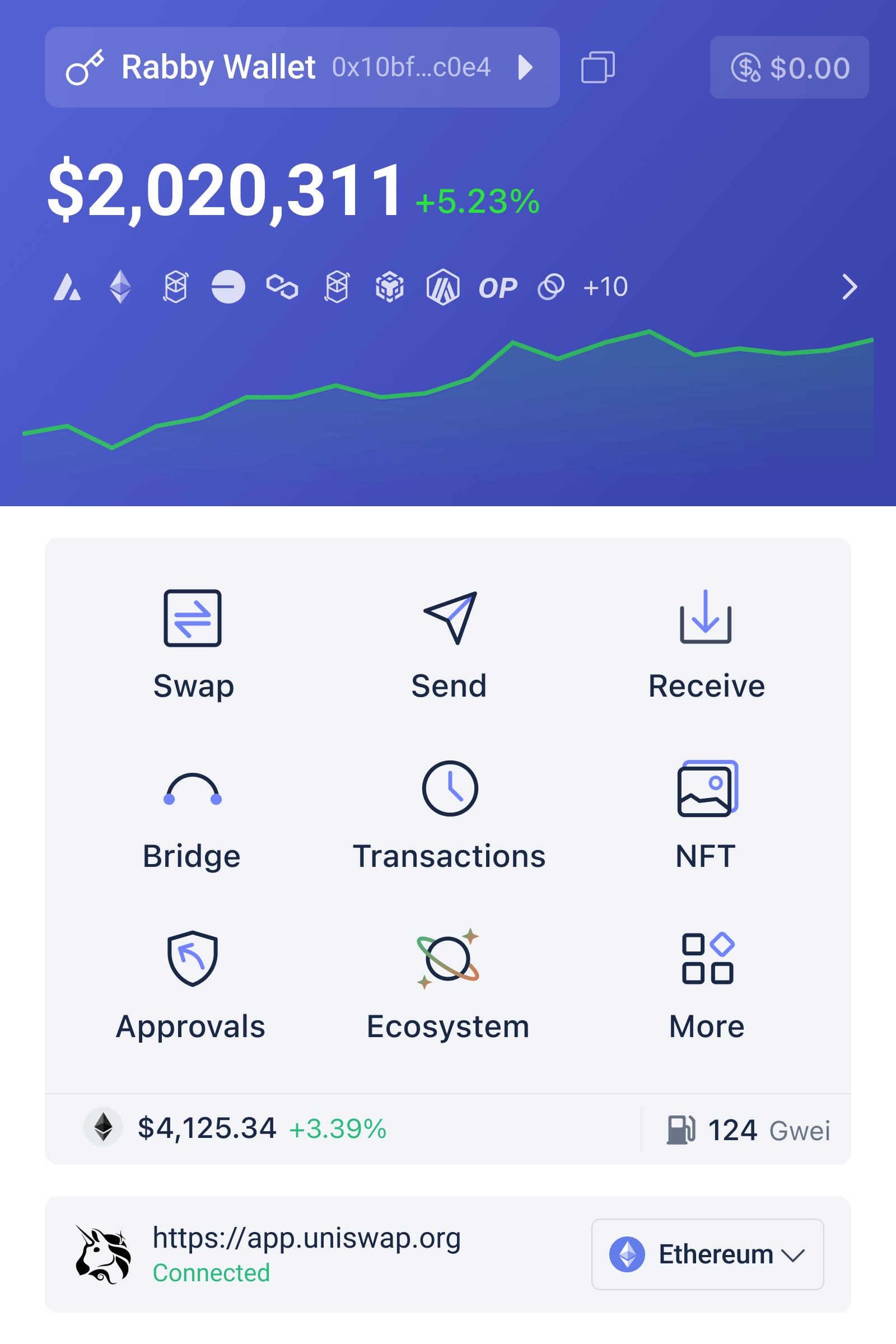
Rabby is useful to examine through that lens. A browser wallet extension sits between a user and the decentralized applications they visit. It can help present transaction details, identify the network being used, and surface warnings or simulations where available. Those features may improve decision quality, but they do not turn a wallet into an automatic safety guarantee. The user still controls the signing decision, and the blockchain generally cannot reverse a transaction merely because the interface was confusing.
Gas Has Two Moving Parts, Not One
A useful starting point is to separate gas used from the price paid per unit of gas. Gas used reflects how much computation and storage a transaction requires. A simple transfer usually consumes less gas than a token swap, liquidity operation, or interaction with a complex lending protocol. The gas price reflects what the network is charging for that execution at a given moment. A rough fee model is therefore: gas used multiplied by the gas price.
This distinction corrects a common misconception. Changing a wallet setting cannot always make a complicated transaction intrinsically smaller. If a swap requires a particular set of contract operations, lowering the offered fee does not remove those operations. It may only make the transaction wait longer, fail to qualify for inclusion, or become exposed to a changing market environment. On networks using Ethereum’s fee structure, the user may also see a base fee determined by network conditions and a priority fee intended to compensate validators. The exact interface differs by network, but the principle remains: execution complexity and network demand are related, not identical.
Gas optimization is therefore partly a timing problem and partly a transaction-design problem. Waiting for calmer network demand can reduce the price per unit, although it cannot guarantee a lower final cost. Choosing a route with fewer contract calls can reduce gas used, but the route may produce a worse exchange rate or greater price impact. Bundling actions may save repeated setup costs in some systems, while a failed bundled transaction can waste gas without completing the desired outcome. Optimization is a trade-off, not a universal discount button.
What a Wallet Extension Can—and Cannot—Do
A browser extension such as Rabby can improve the information layer around a transaction. Before signing, the user may be able to inspect the target contract, the assets involved, the requested token allowance, and an estimated outcome. Simulation and warning systems can be especially valuable for DeFi because many dangerous transactions look ordinary at the level of a button labeled “Confirm.” The meaningful question is not just whether a transaction is technically valid, but what state change it is likely to produce.
That distinction matters for approvals. An approval can allow a smart contract to spend a token on a user’s behalf, sometimes up to a large or unlimited amount. The initial gas fee may be small compared with the value at risk. A user focused only on fee estimation could approve a transaction that creates a much larger security problem later. A security-aware review asks which contract is receiving the allowance, how much authority is being granted, and whether the permission is still needed after the intended action.
Users who want to install the extension should begin from a source they have independently verified rather than from a sponsored search result, a direct message, or an unfamiliar “support” page. The relevant rabby extension download information should be checked against the project’s official identity and the browser’s extension details. This is not merely an installation preference. Fake wallet extensions can imitate branding while capturing seed phrases, private keys, or signatures. A wallet cannot protect a secret that was entered into malicious software before the real wallet was ever used.
The safest mental model is that a wallet extension is a signing interface and a risk-reduction tool, not a custody replacement. The seed phrase remains the root of control. Anyone who obtains it may be able to reconstruct the wallet elsewhere. A browser extension also inherits some browser-level risks: malicious extensions, compromised devices, phishing pages, clipboard replacement, and social engineering can all influence what a user sees or signs. A warning is valuable only if the user pauses long enough to understand it.
Three Approaches to Gas and Security
Manual control in a conventional wallet
Many wallets allow users to adjust fees, select networks, and approve transactions with relatively little interpretation. This can be efficient for experienced users who know the contract, understand the route, and can verify the transaction independently. It also offers flexibility when a user needs to manage a stuck transaction or choose a faster inclusion target.
The cost is cognitive. The wallet may display a fee estimate without making the contract behavior easy to interpret. A low fee setting can also become counterproductive if it causes a transaction to remain pending while market conditions change. Manual control is best for users who understand what they are changing; it is not automatically safer simply because it offers more settings.
Rabby-style transaction review
A wallet that emphasizes pre-signing review and risk signals can reduce the gap between what a decentralized application says and what the transaction actually requests. This is particularly helpful when a user is switching between chains or interacting with unfamiliar protocols. The trade-off is that users may place too much trust in the interface. Simulation results can be incomplete, contract behavior can depend on future state, and a clean-looking transaction is not proof that the protocol itself is economically sound.
In other words, better presentation improves the odds of catching a mistake; it does not eliminate the need for judgment. Users should treat warnings as decision support. They should not interpret the absence of a warning as an endorsement of the protocol, token, yield strategy, or counterparty.
Hardware wallets and smart contract wallets
A hardware wallet moves key operations into a separate device, which can reduce exposure to malware on a general-purpose computer. Its strongest advantage is key isolation. Its disadvantages include additional setup friction, device management, and the possibility that users blindly approve transactions on a small screen because verification feels inconvenient. A hardware device improves one layer of security while leaving contract risk and user error unresolved.
Smart contract wallets take a different path. They can support features such as spending limits, recovery arrangements, or more programmable authorization rules, depending on the design. These controls may be useful for active DeFi users or organizations, but they add protocol complexity and may involve additional transaction costs, dependencies, or recovery assumptions. The best choice depends on what is being protected, how often the wallet is used, and how much operational complexity the user can reliably manage.
A Practical Framework for Lower-Cost, Safer Transactions
Before signing, separate the transaction into four questions. First, is the network correct? Sending an asset on one chain while expecting it on another can create delays, bridge exposure, or permanent loss depending on the asset and destination. Second, is the destination contract or address the one intended? Third, what authority is being granted—especially through token approvals? Fourth, is the transaction economically sensible after gas, slippage, and possible failure are considered?
That last question is frequently neglected. A transaction with a modest gas fee can still be expensive if the swap has high price impact, the route passes through an illiquid pool, or the user must make several follow-up transactions. Conversely, paying a higher fee may be rational when time-sensitive execution matters, provided the transaction has already passed a security review. The relevant metric is not the gas fee in isolation but the total expected cost of the action, including the cost of delay, failure, slippage, and risk.
For routine activity, users can reduce unnecessary gas by planning related actions, avoiding repeated approvals when a safer allowance is sufficient, and using a network whose fee and liquidity profile match the task. Layer 2 networks often reduce transaction costs, but “cheaper” does not mean interchangeable. Users still need to check whether the application supports the chain, whether the asset is an official or bridged representation, how withdrawals work, and whether liquidity is deep enough for the intended trade.
It is also sensible to separate funds by purpose. A wallet used for experimentation, airdrop claims, and unfamiliar applications should not necessarily hold the same balance as a long-term savings wallet. This segmentation does not stop every attack, but it limits the blast radius of a bad signature. For larger balances, a hardware wallet or a more structured custody arrangement may be worth the extra friction. Security is often less about one perfect tool than about preventing one compromised interaction from reaching everything.
Myths That Make DeFi More Expensive and Less Safe
Myth: the lowest displayed gas fee is always the best choice. A fee that is too low can leave a transaction pending or failing, while network conditions and market prices continue to move. The practical target is an appropriate inclusion probability for a transaction that has already been verified—not the smallest number on the screen.
Myth: a simulation guarantees a safe outcome. A simulation can reveal likely state changes under particular assumptions. It cannot guarantee that the contract is trustworthy, that the front end has not been compromised, or that conditions will remain identical when the transaction is mined. It is evidence, not insurance.
Myth: revoking every approval immediately is always optimal. Revoking permissions can reduce standing exposure, but revocation itself requires a transaction and therefore gas. The decision should consider the value at risk, the trustworthiness and future use of the contract, the allowance size, and the cost of changing it. For an inactive or questionable contract, reducing authority may be sensible; for a frequently used protocol, a carefully limited allowance may be a practical compromise.
Myth: a familiar brand makes a transaction safe. Attackers can imitate interfaces, domains, support accounts, and token names. Even legitimate applications can contain bugs or interact with risky third-party contracts. Familiarity should lower neither verification standards nor attention to the actual transaction payload.
What DeFi Users Should Watch Next
There is no recent project-specific news to use as a basis for a new Rabby forecast, so the durable signals are more useful than a speculative headline. Watch how wallet interfaces improve transaction interpretation across chains, how applications adopt more precise allowance controls, and whether users can verify contract intent without reading raw calldata. These developments could make informed signing easier, but they will also create a new dependency: users may need to understand the limits of automated explanations.
If fee markets become more fragmented across Ethereum and Layer 2 networks, the winning workflow will likely be the one that combines chain selection, liquidity awareness, and security review rather than optimizing any single fee field. That is a conditional scenario, not a promise. It depends on interoperability, reliable simulation, clear network support, and users resisting the temptation to treat automation as permission to stop checking.
Frequently Asked Questions
Does Rabby guarantee that a DeFi transaction is safe?
No. A wallet can provide warnings, transaction details, and other review tools, but it cannot guarantee the honesty of a protocol, eliminate smart contract bugs, or recover funds sent to the wrong address. Users should verify the network, contract, permissions, and expected outcome before signing.
How can I reduce gas without weakening security?
Use the correct network, avoid unnecessary repeated transactions, compare the total cost of routes, and transact when demand is less intense when timing permits. Do not disable warnings or approve broad permissions merely to save a small fee. A slightly higher execution cost can be rational if it reduces delay or helps preserve a carefully reviewed transaction.
Should a browser extension hold all of my crypto?
That depends on your risk tolerance and usage pattern, but concentrating every asset in one hot wallet increases the consequences of a compromised device, seed phrase, or signature. Many users benefit from separating active DeFi funds from long-term holdings and considering hardware-backed protection for larger balances.
The sharper conclusion is simple: gas optimization is a risk-adjusted decision, not a race to the bottom. A good wallet extension can make the decision clearer, and a disciplined workflow can make it safer. Neither replaces the user’s responsibility to understand what authority a signature grants and what the transaction will change. In DeFi, the cheapest mistake is still a costly mistake.